
Woodfellas made our name in Gretna manufacturing timber windows, and that’s what we’ve always done. We produce, restore, and put in timber windows from our Gretna premises, working across houses and commercial properties right across Central Scotland.
Each window is built to order using responsibly sourced treated pine or hardwood timber. Double glazing and upgraded security come as standard on every window.
Tenements need sash and case, modern extensions want casement, and some properties need a complete new set. Whatever the project, we build ourselves and install ourselves. No middlemen.
What wooden windows we make
Two primary types of timber window, each perfectly suited to different properties and needs. Both available in treated pine or hardwood, and both include double-glazed sealed units as standard.
Sash windows
Scotland’s original window style.
You know what makes sash windows special? They slide vertically in a box frame using cords and counterbalance weights. They’re the classic window on most of Gretna’s period tenements, and the required replacement for listed buildings and conservation area properties where sash and case was the existing design.
We refurbish, fix, and make custom sash windows. Original profiles. Original proportions. Modern thermal and acoustic results.
If your original frames are sound, restoration, draught-proofing and double glazing upgrades, is often the best route. We carry out full assessments before recommending any replacement, so you know exactly where you are.
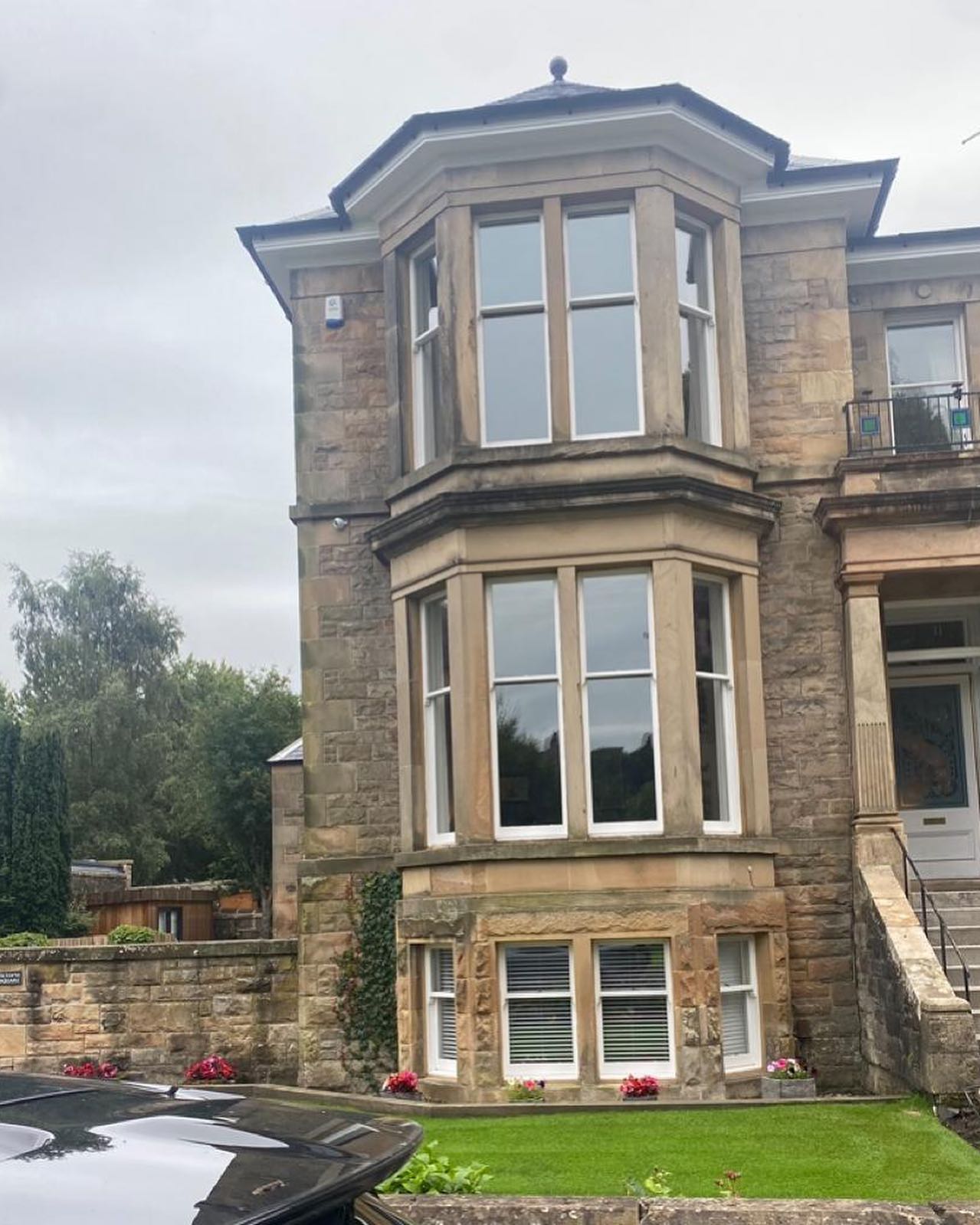
Standard casement windows
Casement windows are hinged and swing outward to open, creating a wider opening for ventilation and making access from inside simple. They’re standard on Gretna properties built from the 1920s onwards, as well as rear extensions, dormers, and newer builds.
We produce custom timber casement windows in side hung, top hung, and fixed styles. Like our sash windows, every casement is built to order and fitted with double glazing as standard.
Our timber casement windows page has more detail on all listed options and options.
Why timber is the right choice for windows
Timber has been the go-to window material for hundreds of years. Not just tradition, it actually outperforms UPVC and aluminium in multiple areas that matter to households.
Natural insulation
Timber transfers heat far less quickly than aluminium and outperforms UPVC at the same frame widths. The result is stronger thermal efficiency from the frame itself, and that’s before the double glazing gets involved.
Scotland runs on central heating. A timber frame’s thermal properties make a measurable impact to what you spend, and that difference shows up over time.
Repair, don’t replace
Where damage appears in a timber window, repair remains a practical choice.
Rot in a sill or bottom rail? Take it out and fit fresh timber. Damaged section of frame? Rebuild. UPVC can’t do any of that. When it goes, the entire unit ends up in landfill and you’re back to square one.
Over the lifespan of a property, repairing and maintaining timber windows rather than replacing them cuts money and reduces waste. It’s a straightforward calculation.
Timber and sustainability
Every length of timber we select is sourced from ethically managed forest.
Stores carbon as long as it works, then biodegrades naturally. No landfill, no harmful process. UPVC is plastic from oil, and aluminium manufacturing is extremely energy-intensive. The difference is clear.
Concerned about your home’s carbon impact? Timber. Obvious option.
Appeal and property value
There’s a substance, a character, and a texture to timber windows that synthetic materials just can’t match.
On a traditional sandstone tenement, a blonde stone villa, or a traditional Scottish cottage, timber windows produce an aesthetic rightness that UPVC consistently fails to replicate.
Value, too. On period properties, where original or sympathetic features are part of what makes them special, timber windows contribute tangible value that UPVC never quite does.
Double glazed timber windows
Every window we make, sash or casement, includes double-glazed sealed units fitted as standard. Always.
Two panes of glass. A cavity between them. The sealed unit sits inside the timber frame and handles the rest, cutting heat transfer, lifting sound insulation.
Put that double glazing together with the inherent insulating qualities of the timber frame, and you’ve got solid thermal and acoustic results across both sash and casement.
Traditional divided-light appearance? We can install glazing bars, a straightforward addition that makes a big visual difference.
If your older timber windows are still solid but single glazed, we can often switch them to double glazing as part of a restoration. This preserves the original frames and lifts thermal performance without a full replacement.
Common on Gretna’s older properties. Original sash windows: solid. Single glazing: admits cold air and ambient noise.
And every unit we put in meets current building regulations for thermal performance, so you’re covered.

Timber windows in conservation areas
Scotland has more than 600 officially recognised conservation areas.
Property in a conservation area? UPVC: not acceptable. Council may require replacements replicating the original. Material, design, profile.
We’ve been manufacturing timber windows for conservation area and listed building properties across Scotland for over 20 years. We understand what the council expects, so you don’t have to work it out yourself.
We can walk you through consent requirements and make windows that satisfy every planning condition while still giving you modern standards. Our sash and case windows page covers the regulations in more depth if you want to read up.
Timber types
Across all our window products, we use two types of timber.
Most customers go for treated pine. It’s pressure-treated to resist rot and decay, accepts a painted finish well, and holds up in Gretna’s rain-heavy weather without any trouble.
Want a natural timber finish? Need extra hardwearing performance? Hardwood. Inherently more resistant to wear. Takes stains and oils beautifully.
We recommend the right timber for each job, based on the property, its exposure, and the finish you want. Just ask and we’ll steer you right.
Timber windows, your questions answered
Which timber window types do you manufacture?
We make both sash and case windows and casement windows, made in treated pine or hardwood. Sash and case windows are the traditional Gretna design, operating by moving vertically within a timber box frame. Casement windows are hinged and open outward. We also build fixed window panels to match any opening setup.
Timber windows vs UPVC, which is better?
On all three fronts, performance, longevity, and looks, yes, timber is the superior choice. It insulates more effectively at the same frame thicknesses, lasts a lot longer when regularly maintained, and can be repaired rather than replaced when damage happens. Timber is also the only material accepted for listed buildings and is greatly preferred in conservation areas.
Can existing timber windows be upgraded to double glazing?
In a significant number of cases, yes. Where existing timber frames are in good condition, we can switch the glazing to double-glazed sealed units as part of a restoration. This preserves the existing frames and character while lifting thermal and acoustic performance.
Get your free timber window estimate in Gretna
Whether your requirement is a single window repair or a complete house of custom timber windows, contact us on 07920 057592 or fill in the form on our contact page and we will get back to you within 24 hours.
Woodfellas also manufactures custom timber doors, bi-fold doors, and timber shop fronts across Gretna and Central Scotland.