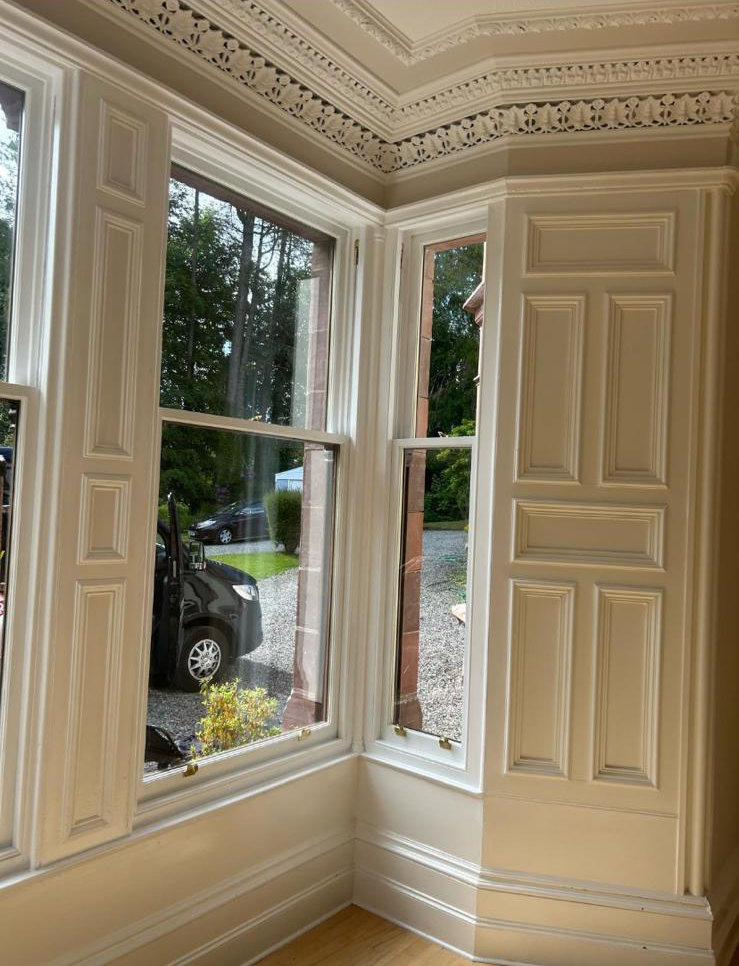
Great work workmanship, lovely guys. Go above and beyond, highly recommend

Woodfellas manufacture and install bespoke timber casement windows from our Glasgow workshop, serving homes and properties across Central Scotland.
Casement windows are found in a wide range of Glasgow properties, from inter-war semis and post-war housing to modern builds and extensions. We make every casement window to measure using treated pine or hardwood timber, with double glazing and enhanced security fitted as standard.
A casement window is hinged on one side and swings outward to open, unlike a sash and case window which slides vertically within a frame. Casement windows use a simpler mechanism with no cords, pulleys, or counterbalance weights, which means fewer moving parts and less that can go wrong over time.
You’ll find casement windows on properties across Glasgow, particularly from the 1920s onwards when building styles moved away from the traditional sash and case design. They’re also common in extensions, dormers, and newer builds where a different look or wider opening is needed.

Timber casement windows combine the practical benefits of the casement design with the warmth and character of real wood. Here’s what that means for your home.
Casement windows can open up to 90 degrees, which lets in far more air than a sash window that only opens halfway. That makes a real difference in kitchens, bathrooms, and bedrooms where good airflow matters. On warm days you get a full, unrestricted opening, and on cooler days you can set the window on a restrictor for a controlled trickle of fresh air.
Because casement windows swing outward, you can reach both sides of the glass from inside the room. That’s a significant advantage on upper floors where cleaning the outside of a sash window means leaning out or hiring someone with a ladder. Some casement styles are fully reversible, rotating 180 degrees so the outer face comes inside for cleaning.
When you close a casement window and turn the handle, the cockspur locking handle pulls the sash firmly into the frame, compressing the weather seals all the way around. This gives a tighter seal than a sliding sash, which is naturally harder to seal because the sash needs enough clearance to move freely. The result is less draught, less noise, and better thermal performance from day one.
UPVC casement windows are common, but timber outperforms them in several ways that matter over the long term. Timber is a natural insulator, which means the frame itself conducts less heat than a UPVC profile of the same thickness. Timber can be repaired if it gets damaged, while UPVC has to be replaced. And timber is a renewable, biodegradable material, while UPVC is plastic that sits in landfill for centuries when it eventually reaches the end of its life.
Then there’s the look. Timber casement windows have a depth and weight to them that UPVC frames can’t match. The paint sits differently, the profiles are crisper, and the overall impression is of something made rather than manufactured.
Great work workmanship, lovely guys. Go above and beyond, highly recommend
We have used ryan for many shopfront projects over the years .He has always delivered a fantastic job regardless of the complexity and time scale.My clients always comment on the finish and detail.Would recomend wholeheartedly.
Ryan and co are talented, courteous, hard-working perfectionists, who clearly love what they do. Based on their fantastic work replacing our storm doors and back door, I 100% recommend them.
Ryan and his team have been a pleasure to do business with. Two beautiful new sash and casement windows fitted in our B-listed home in one day with no mess or stress. No issues and outstanding workmanship. A++++

Every casement window we manufacture comes with double-glazed sealed units as standard. The sealed unit sits within the timber frame and uses two panes of glass separated by a cavity to reduce heat transfer and cut down on outside noise.
Because casement windows compress against their seals when closed, the overall thermal performance of a double-glazed timber casement is excellent. You get the insulating benefit of the timber frame combined with the sealed unit and a tight, draught-free closure. For properties where energy efficiency is a priority, timber casement windows are a strong choice.
We can also fit casement windows with glazing bars if your property needs a traditional divided-light appearance, and we offer a range of glass options including obscure glass for bathrooms and toughened safety glass where building regulations require it.
While most of Glasgow’s conservation area properties have sash and case windows, some do have original casement designs, particularly in areas built or extended during the early to mid-twentieth century. If your property is in a conservation area or is a listed building and the original windows were casement, the replacement must match.
Timber is the only acceptable material for listed building windows, and Glasgow City Council strongly discourages UPVC in conservation areas. We manufacture timber casement windows that match the original profile, proportions, and glazing pattern, so your replacement meets every planning requirement while giving you modern double-glazed performance.
If you’re unsure whether your property needs Listed Building Consent or prior approval, we can advise you on the requirements and help you through the process.
We manufacture casement windows in several configurations depending on the property and your preferences.
The most common type. The window is hinged on one vertical side and swings outward when you turn the handle. Side hung casements can be left-opening, right-opening, or paired as a double window with two opening sashes meeting in the middle. This style suits most residential properties and gives you the widest possible opening for ventilation.
Hinged at the top, these windows open outward from the bottom. Top hung casements are often used in kitchens and bathrooms where furniture or worktops sit below the window, because the sash doesn’t swing into the room when you open it. They also shed rain naturally when open, so you can leave them cracked on a wet day without water running down the glass and onto the sill.
Not every window in a run needs to open. We manufacture fixed casement panels that match your opening windows exactly in profile, timber type, and finish. A typical layout might have a fixed centre panel flanked by two opening casements, giving you a wide window with good symmetry and ventilation on both sides.
We manufacture casement windows in treated pine or hardwood, the same timbers we use across all our window and door products.
Treated pine is the most common choice. The timber is pressure-treated to resist rot and decay, and it takes a painted finish well. For properties where a natural timber look is preferred, or where the window needs to be especially hard-wearing, hardwood offers greater durability and a finer grain that shows through stains and oils.
We’ll recommend the right timber for your property based on the location, exposure, and the finish you’re after.
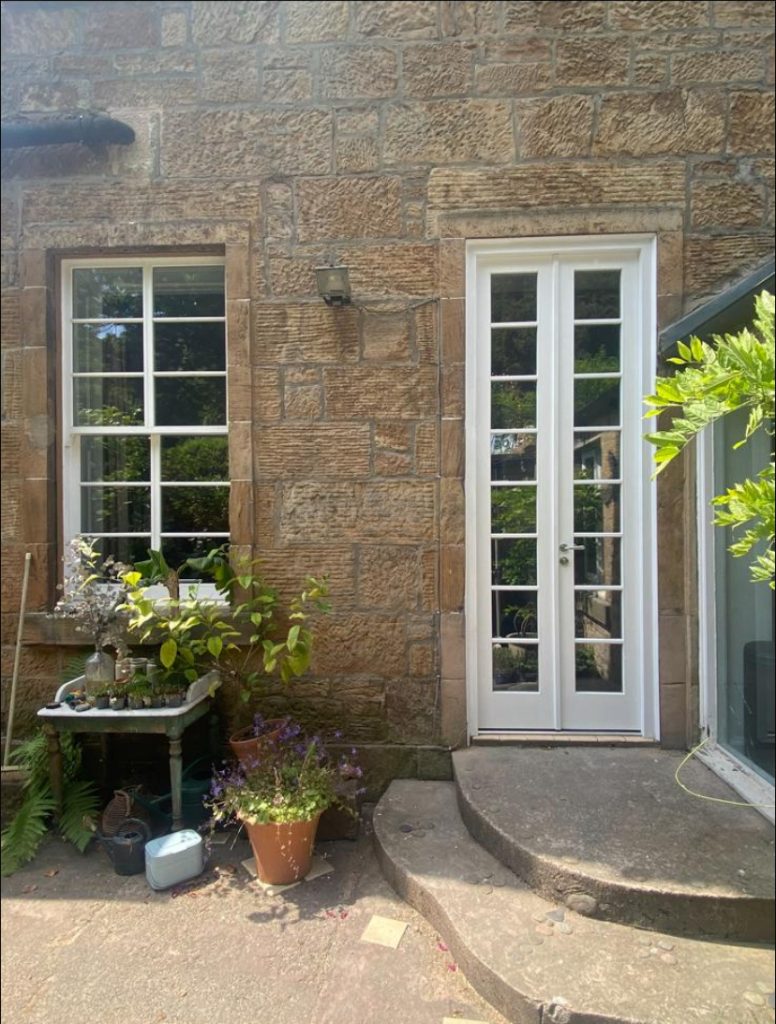
Sash windows slide vertically using a system of cords and counterbalance weights inside a box frame. Casement windows are hinged and swing outward when you turn the handle. Casement windows have a simpler mechanism, open wider for better ventilation, and form a tighter seal when closed. Sash windows are the traditional choice for Glasgow’s older tenement properties, while casement windows are more common in homes built from the 1920s onwards.
Neither is better in absolute terms. It depends on the property. Sash windows suit Victorian and Edwardian tenements where they were the original design, and they’re usually required in conservation areas where sash and case was the original style. Casement windows offer wider opening, easier cleaning, and a tighter seal, so they’re often the better choice for newer properties, extensions, and rooms where ventilation matters most. We manufacture both types and can advise on which suits your property.
Yes. All the casement windows we manufacture come with double-glazed sealed units as standard. The sealed unit sits within the timber frame and reduces heat loss and outside noise compared to single glazing.
In most cases, no. If your property is a listed building you’ll need Listed Building Consent from Glasgow City Council, and if it’s in a conservation area you may need prior approval, particularly for windows visible from the road. For properties outside conservation areas, replacement casement windows don’t usually require planning permission as long as they meet current building regulations.
Yes. We fit casement windows with a cockspur locking system as standard. This is the same locking standard used across the industry for enhanced security, and it also helps compress the weather seals for a tighter fit.
If you need bespoke timber casement windows for your Glasgow property, give us a call on 07920 057592 or fill in the form on our contact page. We’ll get back to you within 24 hours.
We also manufacture timber doors, bi-fold doors, and timber shop fronts across Glasgow and Central Scotland.
