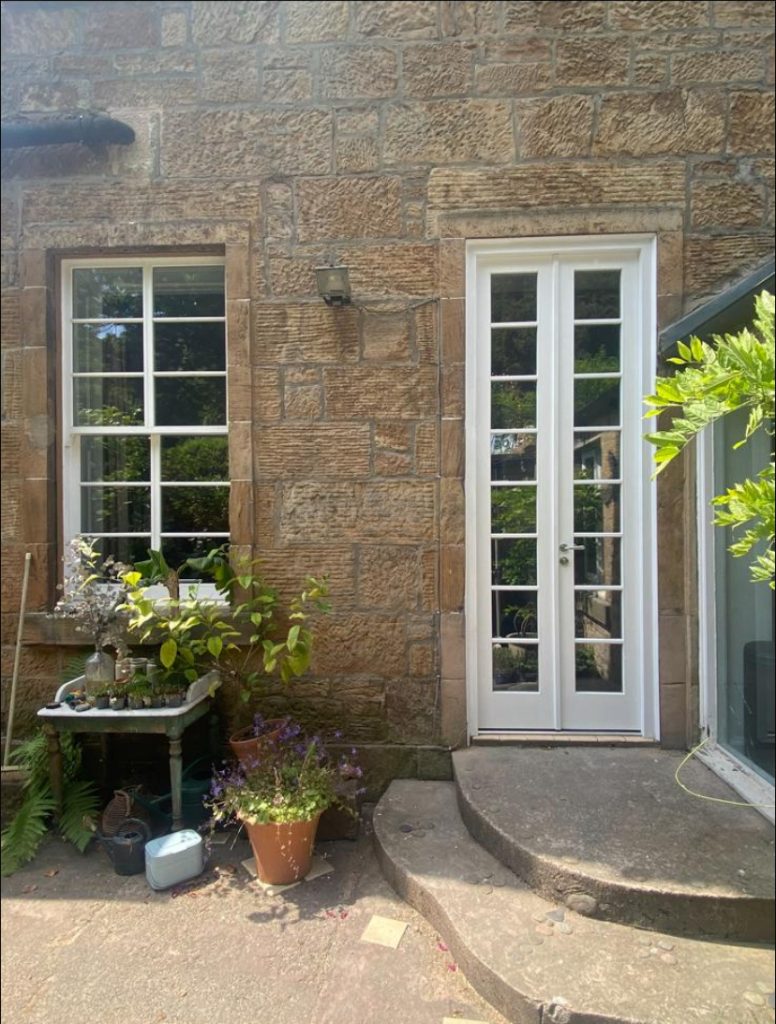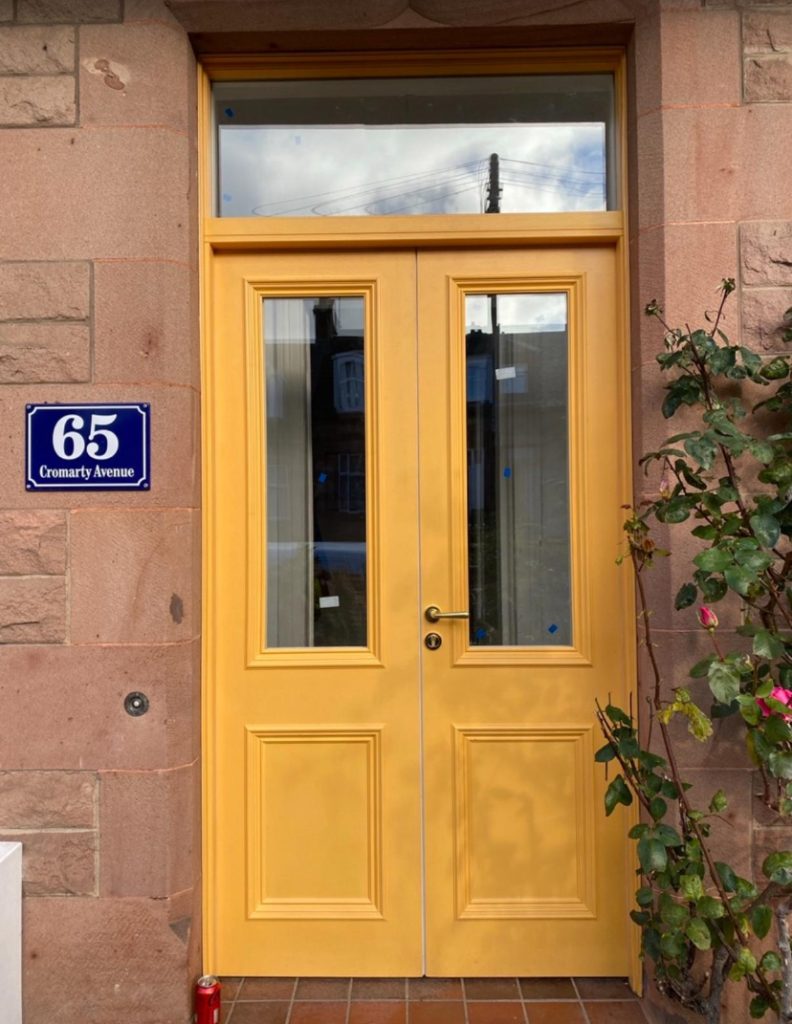
Great work workmanship, lovely guys. Go above and beyond, highly recommend

Woodfellas manufacture bespoke timber front doors for houses, villas, cottages, and newer builds across Glasgow and Central Scotland. Every front door we produce is designed around your property and built at our Glasgow workshop from sustainably sourced hardwood.
Your front door is the first thing visitors notice and the last thing they see when they leave. It sets the tone for the whole property. A bespoke timber front door gives you full control over the style, the proportions, and the finish, so the entrance to your home looks the way you want it to rather than the way a catalogue dictates.
We build timber front doors in four main styles. Each one suits a different type of property and a different level of privacy, light, and visual impact.
A solid timber front door has no glazing. The door is made entirely from timber panels, giving you maximum privacy and a bold, traditional presence at the front of the house. Solid doors work particularly well on stone-built villas and period properties where the entrance is meant to feel substantial. The panelling can be raised, flat, or fielded to match the period of the building, and the heavier feel of a solid timber door when it opens and closes is something no composite or UPVC door can replicate.
Part-glazed front doors combine solid timber panels in the lower half with glazed panels above, letting natural light into the hallway while keeping privacy at eye level. This is the most popular configuration we build because it balances light, security, and kerb appeal. The glazed section can be clear, obscure, or decorative depending on how much the hallway relies on the front door for daylight and how exposed the entrance is to the street.
Where a bright, open entrance matters more than privacy, a fully glazed front door floods the hallway with daylight. The glass sits within a timber frame, and all glazing is double glazed as standard for thermal and acoustic performance. Fully glazed doors suit properties where the front door is set back from the street, recessed into a porch, or faces away from passing foot traffic. Obscure glass gives you the light without the exposure if privacy is a concern.
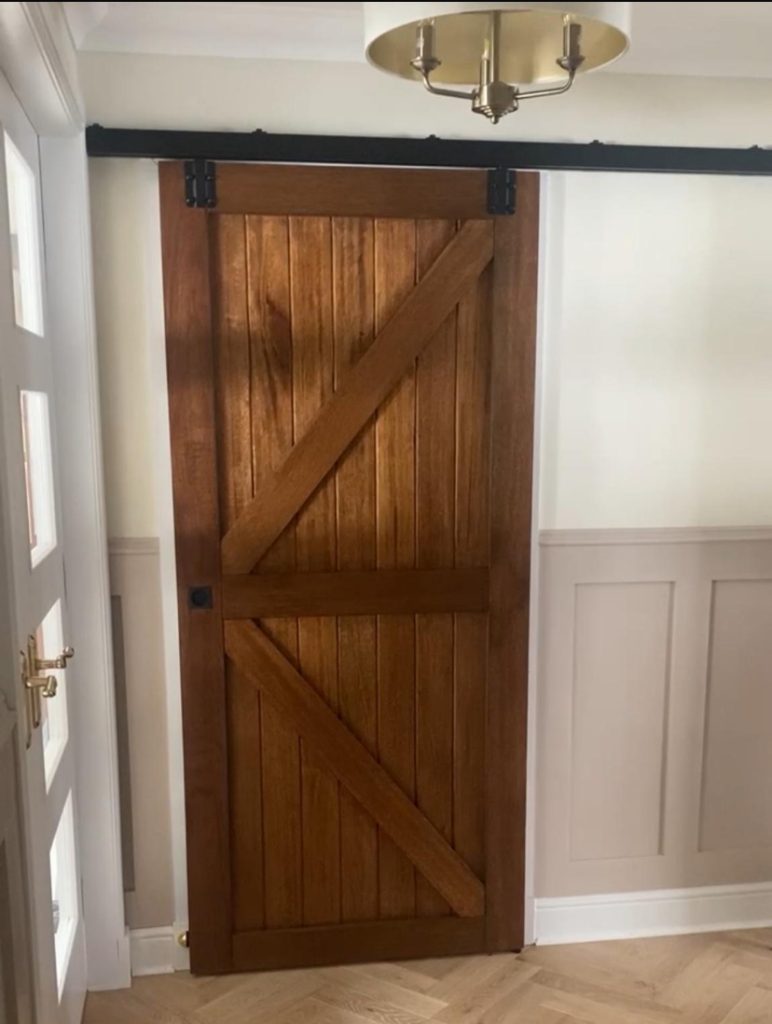
Most front door companies in Glasgow sell composite doors with a timber-effect surface, or UPVC doors that come in a limited range of standard sizes. Both are mass-produced, and while they serve a purpose, they’re a compromise. Here’s what timber offers that the alternatives don’t.
A composite door looks reasonable in its first year. After a few Scottish winters, the foil finish can peel at the edges, the colour fades unevenly, and the surface starts to look tired. A timber front door ages in a different way entirely.
The paint or stain finish protects the wood underneath, and when that finish eventually weathers, you sand it back and apply a fresh coat. The door underneath hasn’t changed. It’s still the same solid timber it was on day one, and it still has the grain, the depth, and the weight that made it look right on the property in the first place.
Older Glasgow houses rarely have standard door frames. A Victorian villa might have a wider, taller opening than anything you’ll find in a door showroom, and a cottage conversion could have an opening that’s shorter than modern standard height. A bespoke timber front door is built to the exact measurements of your frame, which means the fit is tight, the seals work properly, and there are no packing strips or trim pieces bridging gaps where a standard door didn’t quite fill the space.
Timber doesn’t transfer heat the way composite cores or UPVC frames do. The material itself resists the passage of warmth from inside to outside, which means the door contributes to the thermal envelope of your home rather than undermining it. Paired with double glazing in any glazed panels and proper draught seals around the frame, a timber front door holds heat in your hallway noticeably better than the thinner, lighter alternatives.
Great work workmanship, lovely guys. Go above and beyond, highly recommend
We have used ryan for many shopfront projects over the years .He has always delivered a fantastic job regardless of the complexity and time scale.My clients always comment on the finish and detail.Would recomend wholeheartedly.
Ryan and co are talented, courteous, hard-working perfectionists, who clearly love what they do. Based on their fantastic work replacing our storm doors and back door, I 100% recommend them.
Ryan and his team have been a pleasure to do business with. Two beautiful new sash and casement windows fitted in our B-listed home in one day with no mess or stress. No issues and outstanding workmanship. A++++
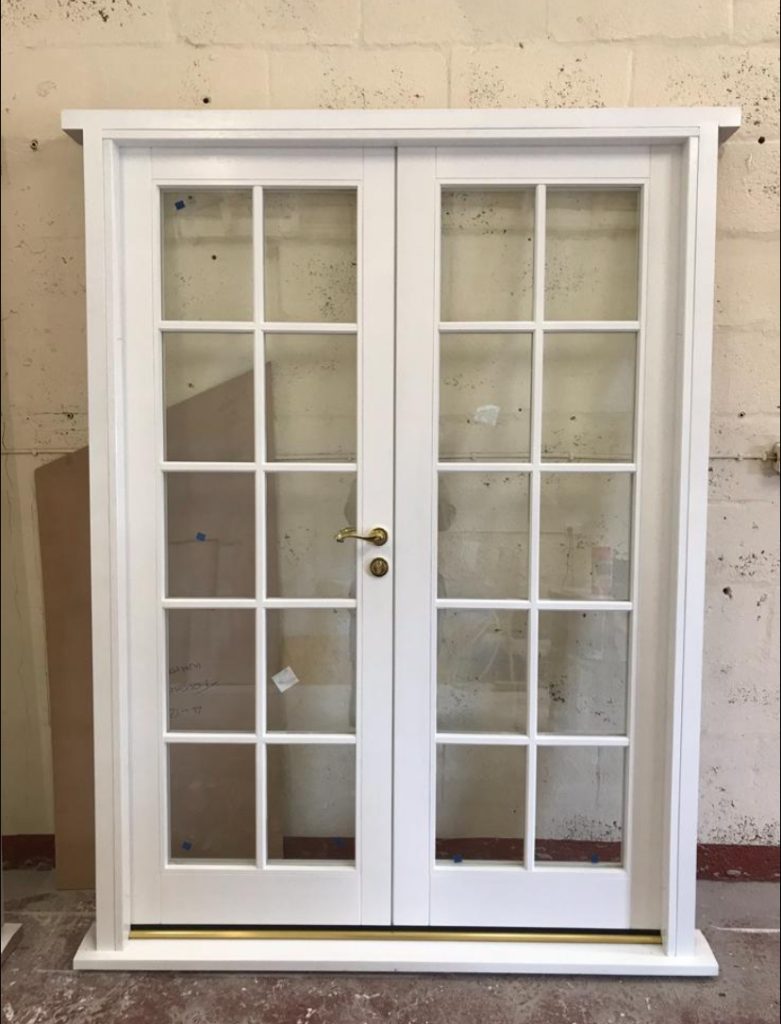
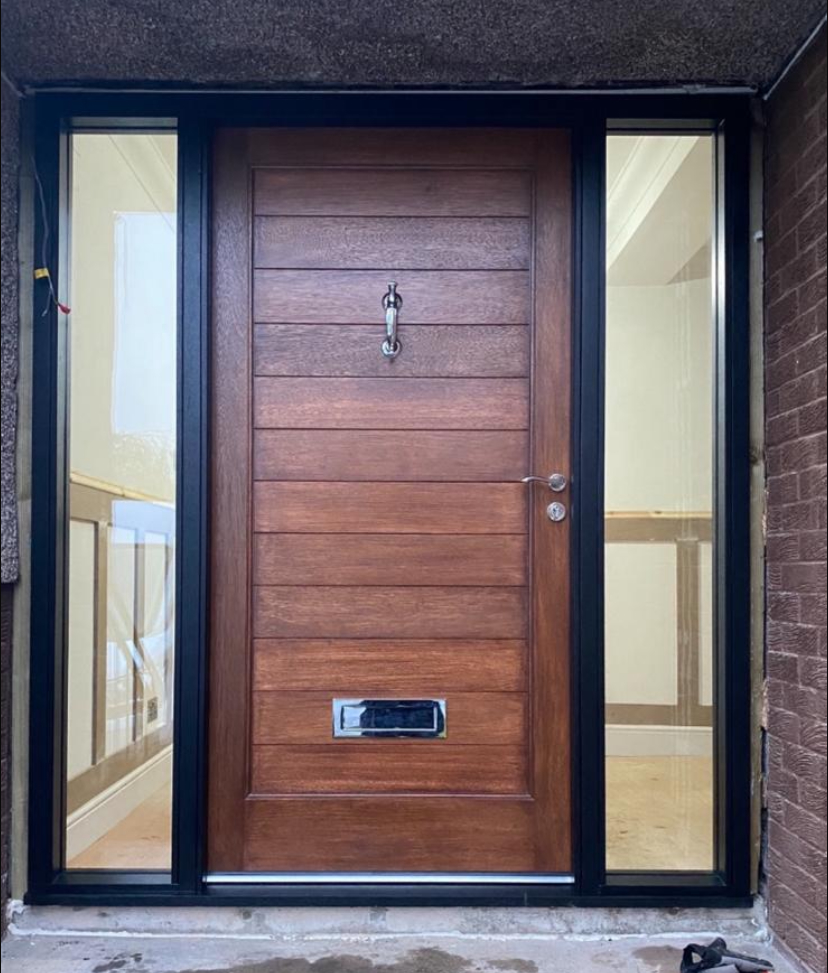
The handles, knocker, letterbox, and hinges on your front door contribute as much to the finished look as the timber and glazing. We call this door furniture or ironmongery, and there’s a far wider choice than the standard chrome set you get with a composite door.
Lever handles, pull handles, thumb latches, ring knockers, lion-head knockers, plain knockers. The range is enormous, and the material can be polished chrome, brushed nickel, satin brass, antique brass, black iron, or bronze. Matching the ironmongery to the period of the house (or deliberately contrasting it for a contemporary twist) is one of the most satisfying parts of designing a bespoke front door.
A letterbox might seem like a minor detail, but it sits right in the middle of the door and people look at it every day. Horizontal or vertical placement, matching or contrasting finish with the handle and knocker, with or without a draught-excluding flap on the inside. We fit the letterbox during manufacture so the aperture is clean, the flap moves freely, and the unit doesn’t weaken the surrounding timber.
Front door hinges need to carry the weight of a solid or glazed timber door through thousands of openings and closings. We use heavy-duty butt hinges finished to match the rest of the ironmongery, and we mortise them cleanly into the door edge and frame so they sit flush. The hinges are load-rated for the weight of the specific door being built, which is something you don’t get when you buy hinges off a shelf and fit them yourself.
Every front door we build includes multi-point locking that engages at several positions around the door perimeter when you lift the handle or turn the key. This distributes the force of any attempted break-in across the full edge of the door rather than concentrating it at one lock point.
You pick the colour. That’s one of the advantages of a bespoke timber front door over a composite or UPVC one, where you’re limited to whatever the manufacturer stocks.
Painted finishes are the most common choice. We apply a multi-coat paint system in our workshop using spray equipment for a smooth, even coat without brush marks. Black, grey, green, red, navy, cream, white, and every shade in between. If you have a specific RAL code or a colour sample from another part of the property, we’ll match it.
Stained finishes show the natural grain of the timber while adding colour and protection. Staining works best on hardwood, where the grain pattern is the point. Medium and dark oak tones are popular, but lighter finishes and grey-toned stains are increasingly requested on contemporary properties.
Natural oiled finishes are an option for hardwood doors where you want the timber to look like timber without any pigment covering the surface. A quality oil finish feeds the wood, repels moisture, and builds a soft sheen that deepens over time as the timber weathers naturally.
The glazing you choose affects how much light reaches your hallway, how private the entrance feels, and how the door looks from the street. We offer several options, all double glazed as standard.
A fanlight is a glazed panel above the door, either a fixed pane within the door frame or a separate arched or rectangular unit above the frame itself. Fanlights were a common feature on Glasgow’s Victorian and Edwardian houses, and adding one to a new front door restores a detail that many replacement doors have lost over the years. A transom bar separates the fanlight from the main door below, and we can match the transom profile to the period of the building.
Sidelights are narrow glazed panels flanking the door on one or both sides. They widen the visual impact of the entrance, bring additional daylight into the hallway, and give the front of the house a more symmetrical, balanced appearance. Sidelights can be clear, obscure, or decorative, and we build them as part of the same frame unit as the door so everything lines up and seals properly.
For properties where the front door should make a statement, decorative glazing transforms a simple panel of glass into a design feature. Leaded glass, etched glass, and textured patterns all provide varying levels of privacy while adding visual interest from both inside and outside the house. We work with specialist glass suppliers to source patterns that suit the property, whether that’s a traditional leaded design for a Victorian villa or something more contemporary for a modern home.
Not every front door needs decorative glazing. Clear glass maximises light and shows off a well-kept hallway. Obscure glass (frosted or patterned to diffuse the view) lets light through while blocking the line of sight from the street. We can mix the two within the same door if you want clear glass in the upper section for light and obscure glass lower down for privacy.
If your property sits within one of Glasgow’s conservation areas or carries a Category A, B, or C listing, any external door replacement needs to be sympathetic to the original design.
We’ve built replacement front doors for listed houses, villas, and cottages across Glasgow and beyond. Each one replicates the panel arrangement, moulding detail, and proportions of the original door while adding the modern benefits of double glazing and multi-point security. If your property requires Listed Building Consent or conservation area approval, we can guide you through the application based on what we’ve seen approved in your area.
Yes. Every front door we build comes with multi-point locking system as standard. The locking engages at multiple points around the door edge, and the door itself is solid timber with double-glazed panels. Solid timber is harder to kick in or lever open than hollow-core composite doors, and the combination of locking systems makes forced entry extremely difficult.
Composite doors have a foam or timber core wrapped in a GRP (glass-reinforced plastic) skin. They’re lighter, cheaper to produce, and come in standard sizes. Timber front doors are heavier, made to the exact size of your opening, and finished in real paint or stain rather than a plastic coating. Timber can be repaired and refinished as it ages, while composite doors need full replacement when the surface cracks, peels, or the core warps. For properties that deserve a door with real presence and longevity, timber is the better investment.
You can choose any colour. We spray-paint or stain the door at our workshop, so the finish is smooth, durable, and factory-quality. If you have a RAL code, a Farrow and Ball reference, or even a photo of the colour you want, we’ll match it. The finish can be refreshed or changed entirely in future without replacing the door.
Less than most people expect. A painted timber front door needs its finish inspected every few years and a fresh coat applied when the existing paint starts to thin or chalk. On a door that’s sheltered by a porch or canopy, the finish can last five years or more between recoats. The timber underneath requires no treatment beyond keeping the paint intact. Stained and oiled finishes need topping up more frequently, typically every one to three years depending on how exposed the door is.
In most cases, no. Replacing an existing front door like-for-like or with a similar style falls under permitted development. If your property is listed, you’ll need Listed Building Consent, and properties in conservation areas may need approval for changes visible from the street.
If you’re looking for a bespoke timber front door for your Glasgow property, call 07920 057592 or fill in the form on our contact page. We’ll arrange a visit, talk through your options, and give you a written quote.
We also manufacture sash and case windows, storm doors, bi-fold doors, and timber shop fronts across Glasgow and Central Scotland.