
Woodfellas built our name in Crosshouse manufacturing timber windows, and that’s what we’re still doing. We make, restore, and put in wooden windows from our Crosshouse base, covering houses and commercial clients throughout Central Scotland.
Every window is built to order. Ethically sourced treated pine or hardwood. Double glazing and improved security as standard.
Tenements need sash and case, modern extensions want casement, and some properties need a complete new set. Whatever the property type, we build ourselves and put them in ourselves. No middlemen.
Our wooden window options
We build two primary types of timber window, one built for older properties, one built for newer ones. Both are offered in treated pine or hardwood, and both come with double-glazed sealed units as standard.
Traditional sash windows
The traditional window type for Scottish properties.
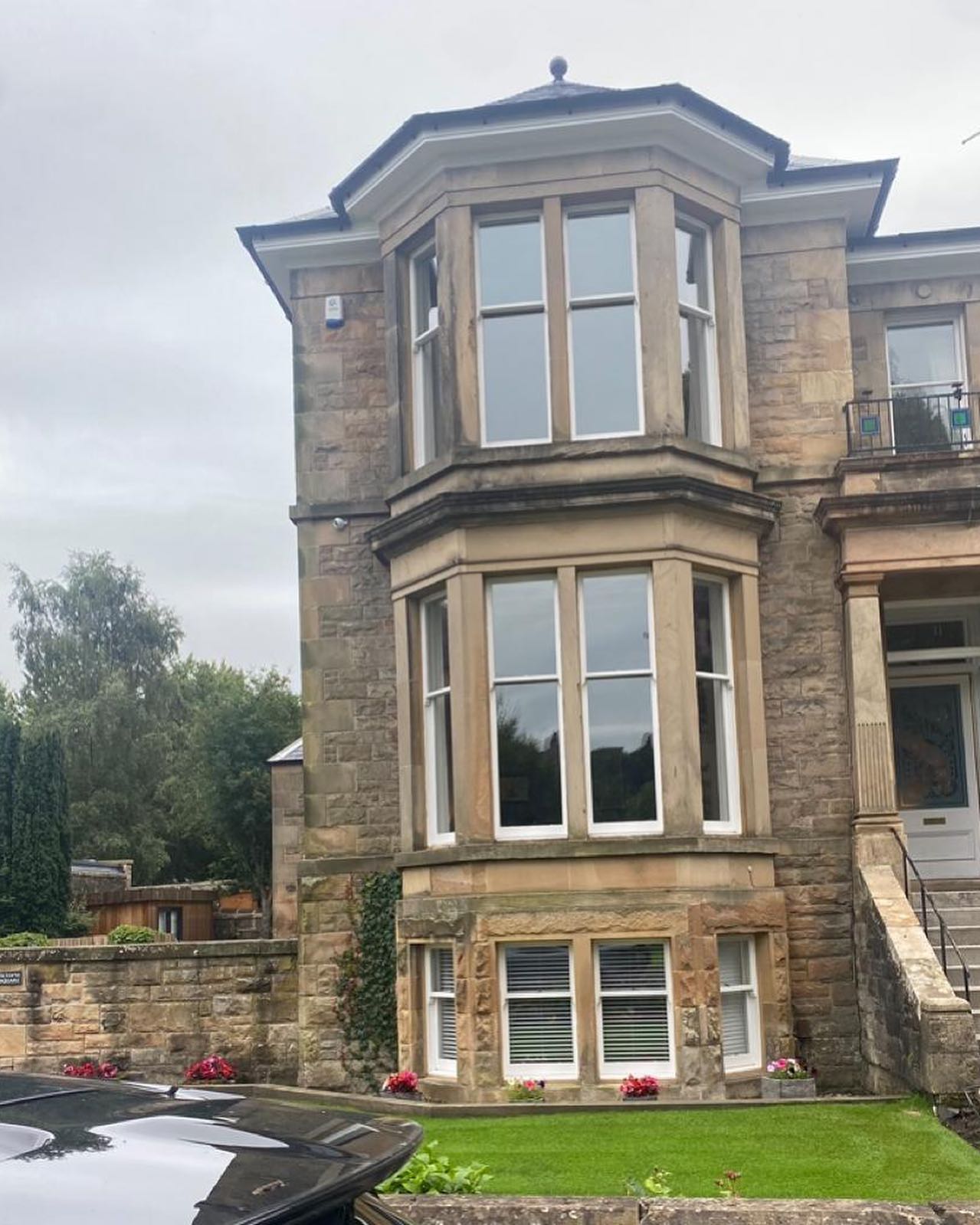
Sash windows work on a clever system: they slide vertically in a timber box frame using weighted cords and pulleys. You’ll see them on most of Crosshouse’s Victorian and Edwardian tenements, and if you’ve got a listed building or conservation area property, they’re the required replacement where sash and case was the original design.
Whether your sash windows need restoring, sorting, or replacing altogether, we produce custom ones that replicate the original profiles and proportions, while still giving you modern thermal and acoustic standards.
Restoration typically includes draught-proofing and double glazing upgrades, and it’s the best route where the existing frames are sound. We carry out full assessments before recommending replacement.
Traditional casement windows
Hinged. Swing outward to open. Wider opening, easier cleaning from inside. Standard on Crosshouse properties dating from the 1920s on, including extensions, dormers, and newer builds.
We make custom timber casement windows in side hung, top hung, and fixed configurations. Just like our sash windows, every casement is built to order and double glazed as standard, no exceptions.
Want to see all the styles and choices? Head to our timber casement windows page.
Why timber makes sense for windows
Timber windows have been around for hundreds of years, and there’s a reason they’ve stayed the first choice. It’s not just tradition, timber truly outperforms UPVC and aluminium in multiple areas that make a difference to property owners.
Natural thermal performance
Here’s something that surprises people: timber actually carries heat far less quickly than aluminium, and it outperforms UPVC at the comparable frame thickness. That means the frame itself is doing better thermal work before you even consider the double glazing.
In a country like Scotland, where heating costs are a real issue for property owners, the insulating qualities of a timber frame make a measurable impact.
Repair, don’t replace
Timber window takes a knock? Good news: you can fix it.
Rot in a sill can be removed and fresh timber put in its place. A damaged portion of frame can be rebuilt. UPVC offers no such option: when it fails, the entire unit ends up in landfill and the process starts again.
Over a property’s working life: repair and maintain, not replace. Cuts money. Reduces waste.
Sustainability
All timber that we put into our windows is sourced from ethically managed woodland.
Timber is a sustainable resource that holds carbon for its entire life and biodegrades naturally at end of life. UPVC is a plastic made from oil, and aluminium production is highly carbon-heavy, worth knowing if the environment matters to you.
If you care about the carbon footprint of your house, timber is the obvious option.
Timber windows, character and value
Timber windows have a substance, physical depth, and texture that no man-made material can reproduce.
On a sandstone tenement, a blonde stone villa, or a traditional Scottish cottage, timber windows look right in a way UPVC never quite manages. Worth noting if the look matter to you.
Value, too. On period properties, where original or sympathetic features are part of what makes them special, timber windows contribute real value that UPVC never quite does.
Timber windows with double glazing
Every window we produce, sash or casement, features double-glazed sealed units fitted as standard. Always.
Sealed unit in the frame. Two panes of glass. Cavity between them. Reduces heat transfer. Improves sound insulation.
Put that double glazing together with the natural thermal properties of the timber frame, and you’ve got solid thermal and acoustic performance across both sash and casement.
If your property needs a traditional divided-light appearance, we can install glazing bars, just let us know.
The frames are solid, they’re just single glazed. In many cases, we can switch to double glazing as part of a restoration programme, preserving what’s worth saving, improving performance, no full replacement required.
This represents a frequent request on Crosshouse’s older properties, where solidly built original sash windows perform structurally well but single glazing lets in cold air and street noise.
Every unit we put in is compliant with the latest building regulations for thermal performance. Always.

Timber windows in listed buildings and conservation areas
Scotland contains over 600 officially recognised conservation areas.
If your property is in one of these areas, you need to know that UPVC is not an permitted window material. Your local council will often require replacements that mirror the original in material, design, and profile.
We’ve been manufacturing timber windows for conservation area and listed building properties throughout Scotland for over 20 years. We understand what the council requires, so you don’t have to work it out yourself.
We can advise on consent conditions and make windows that tick every planning condition while still giving you modern standards. Our sash and case windows page covers the regulations in more depth if you want to read up.
Wood types we use
Across all our window ranges, we use two types of timber.
Treated pine is the most popular option, and for good reasons. It’s pressure-treated to prevent rot and decay, holds a painted finish well, and performs well in Crosshouse’s rain-heavy climate.
For properties where a natural timber look is wanted, or where extra durability is needed, we supply hardwood, which is by nature more immune to deterioration and takes stains and oils with excellent results.
We’ll recommend which timber is right for your project based on the property, the exposure level, and what finish you’re after.
Timber windows, your questions answered
Which timber window types do you manufacture?
We make two main types: sash and case windows and casement windows, both made in treated pine or hardwood. Sash and case are the traditional Crosshouse design, sliding vertically within a box frame. Casement windows are hinged and swing out. We also make fixed window panels to match any opening configuration.
Are timber windows better than UPVC?
For performance, lifespan, and appearance? Yes, timber is the better choice. It insulates better at the comparable frame width, lasts considerably longer when maintained, and can be fixed rather than replaced. It’s also the only material permitted for listed buildings and is strongly preferred in conservation areas.
Can existing timber windows be converted to double glazing?
Many cases, yes. The current frames are sound, so we upgrade the glazing to double-glazed sealed units as part of a restoration. Original frames remain, character stays, and the thermal and acoustic results improves, without a full replacement.
Get a free estimate for timber windows in Crosshouse
Single window repaired. Complete house of custom timber windows. Call 07920 057592 or complete the form on our contact page. We’ll get back to you within 24 hours.
Woodfellas also manufactures custom timber doors, bi-fold doors, and timber shop fronts throughout Crosshouse and Central Scotland.